
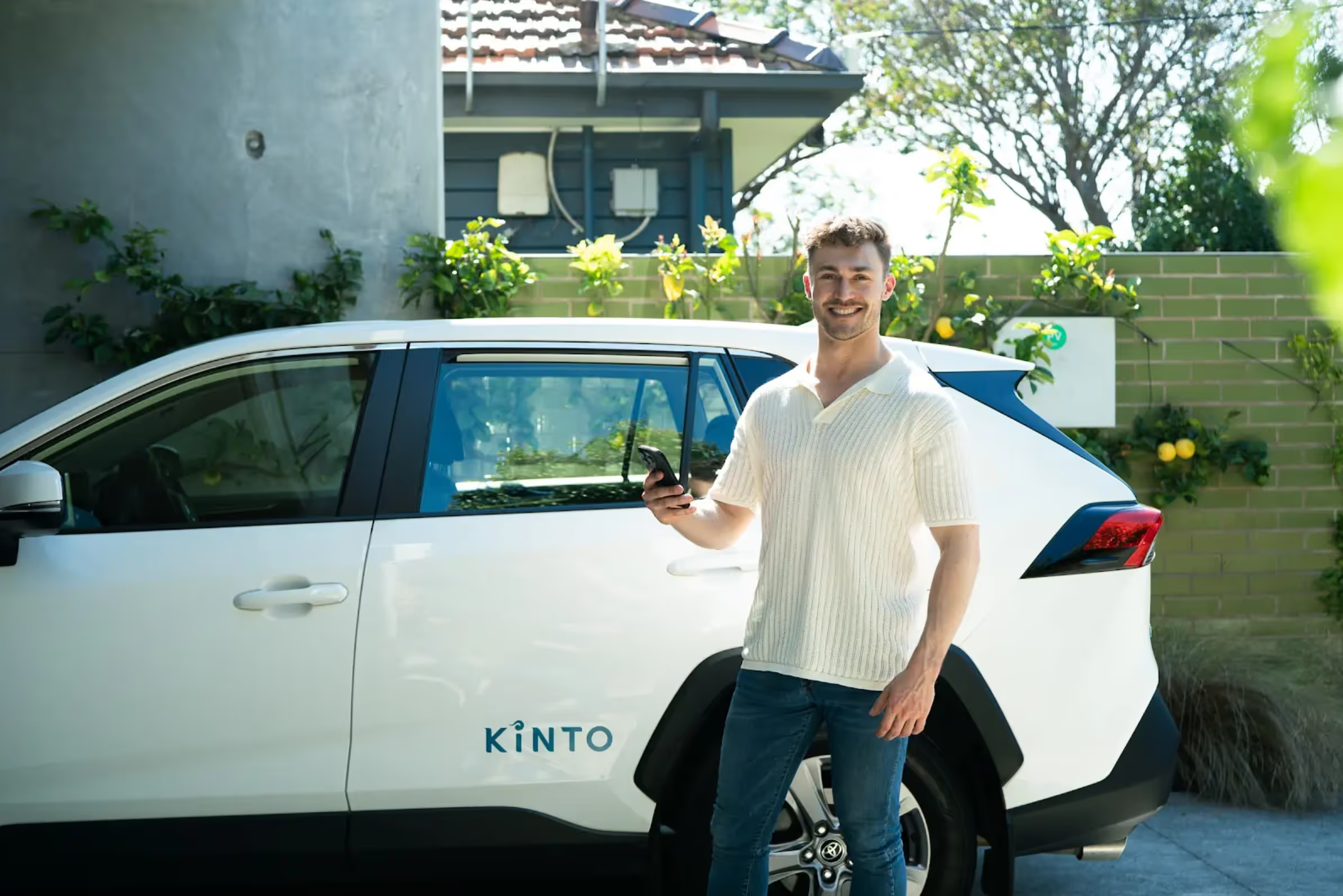
From November 2025, all new-model electric (EV), hybrid and hydrogen fuel cell vehicles in Australia must be fitted with an Acoustic Vehicle Alerting Systems (AVAS) as a new safety standard to protect pedestrians.
KINTO has already begun rolling out vehicles nationwide with AVAS fitted to improve safety for those on the road. Members can rent vehicles with this enhanced safety system through the car hire app. When you choose car hire with KINTO, you’re opting for more than potential convenience; you’re choosing added safety with a forward-thinking rental service.
In this blog, we’ll break down what AVAS are, why they’re necessary and everything you need to know about the mandate surrounding them.
What are AVAS & Why are they important?
You may have remarked how quiet an EV engine is. But if you consider that many people rely on auditory cues while out on the streets, we can begin to see why the faint noise of an EV engine may pose a danger, especially to children, cyclists, and those with low vision or visual impairment.
So what is an AVAS? An AVAS emits a sound when an EV is travelling at low speeds, such as driving through low-speed streets, intersections, or carparks. The aim of the noise is to alert pedestrians to its presence and avoid potential collisions.
AVAS has been estimated to prevent 1 fatality and 75 serious injuries a year, and will work to improve pedestrian safety nationwide.
Australia makes AVAS mandatory
Australia now joins the European Union, the United States and Japan, where AVAS have been mandatory for years . This alignment represents a meaningful step toward improved vehicle and community safety, helping prevent injuries and fatalities on the roads.
Research has shown that 35% of people with vision impairment have experienced a collision with a silent vehicle (Fleet EV News ). That’s a significant number of vulnerable Australians at risk simply because they can't hear a vehicle approaching.
Vision Australia have been advocating for AVAS since 2018, and with EVs projected to make up around 90% of Australia’s vehicular traffic by 2050, the urgency is clear. These changes will assist in ensuring a safer road environment in the future.
Toyota supports the change with KINTO
KINTO's fleet supplier, Toyota, has been actively integrating safety-focused features to enhance protection for both occupants and other road users. Toyota has been forward about its commitment to safer mobility solutions for all.
“Safety remains one of our highest priorities when developing, designing and engineering Toyota vehicles and it’s a continuous process so when new technologies are developed, we make them available for customers as soon as possible,” said Mr Hanley, Toyota Australia Vice President Sales, Marketing and Franchise Operations. (Toyota Yaris Update, 2025)
KINTO has already begun adding EVs with the AVAS upgraded safety system to its fleet and will continue to roll these out nationwide until all KINTO vehicles have AVAS . With AVAS now mandatory in new Australian EV models, KINTO members can experience added safety across new model additions to the KINTO fleet.
What AVAS will mean for your KINTO car hire experience
KINTO has begun adding vehicles with AVAS onto the fleet, over time this will become the entire passenger vehicle fleet. When you rent a KINTO, AVAS will offer some benefits to your experience.
Added safety for pedestrians
When in residential streets, shopping centres, driveways, and other busy areas, the low-speed alert sound helps ensure your vehicle is detectable, reducing the likelihood of a collision.
More accessibility
For community members with low vision or visual impairment, the AVAS sound will serve as a critical alert to pedestrians about nearby vehicles. These improvements will allow all Australians to navigate public spaces more safely.
A more responsive EV and hybrid experience
The addition of AVAS will improve member experience as the technology supports safer road environments and may help prevent avoidable accidents.
A consistent safety feature across the KINTO fleet
As new EV and Hybrid models are introduced to the KINTO fleet, they will meet the updated AVAS national requirements. KINTO members will benefit from this safety feature, providing added protection on the road.
How does AVAS work?
The system is fitted to all new EV and Hybrid models and will essentially emit a gentle, non-intrusive sound when the vehicle is travelling at low speeds of 25 km/h or less.
The sound will be no louder than that of a standard internal combustion engine vehicle, loud enough to be noticed by pedestrians reliant on those auditory cues and soft enough to remain pleasant for drivers.
The sound is designed to blend in with urban environments without contributing to noise pollution. This new safety feature aims to alert pedestrians to vehicles and help reduce the risk of collision from near-silent operation.
As Australia moves towards an electric transport future, AVAS will play an essential role in ensuring the continued importance of safety for all in the road environment. The AVAS will be especially crucial to those who rely on auditory cues to navigate the roads and help avoid potential fatal collisions.
With Australia’s mandatory regulations now aligned with global standards, the change ensures that the safety upgrades for both electric and hybrid vehicles continue to improve. And KINTO’s growing fleet reflects this commitment to safer transport for all Australians.
Curious about AVAS technology? Become a KINTO member and discover hybrid car hire options featuring Australia’s new pedestrian safety technology.
Do all KINTO EVs and hybrids have AVAS?
KINTO has begun the rollout across Australia. From now on, all new Electric Vehicles (EVs) and Hybrid models added to the KINTO fleet will include an AVAS by law. As regulations indicate, all newly approved models must include the system from November 2025. And these will continue to be phased into the KINTO fleet until all vehicles eventually have the system.
Does the AVAS sound loud?
The system has been designed to sound no louder than a standard internal combustion engine vehicle and will provide an auditory alert at low speeds to alert pedestrians that a vehicle is nearby.
Why is AVAS especially important for people with vision impairments?
People with vision impairments rely heavily on auditory cues in road environments. With the rise of EVs and quiet-engine hybrids, these cues have been removed, potentially leading to avoidable collisions. AVAS restores these audible signals to help people with low vision or visual impairments identify when a vehicle is approaching.